
One still, many spirits
Many people assume that everything distilled from one batch of grain is the same. In fact, from the first drop to the last, the spirit's composition keeps changing.
In baijiu distillation, steam rises through the fermented grain in the still, carrying alcohol and aroma upward before it is condensed back into liquid. Compounds with low boiling points come out first, so the first portion is high in strength, sharp in aroma and often harsh. This is the head.
Next comes the heart, sometimes called the middle cut. The strength gradually falls, the aromas and flavours come into balance, and this is the main body of each run.
Toward the end, the strength drops further and heavier, higher-boiling compounds increase. The spirit may even turn slightly cloudy. This is the tail.
None of these sections is simply "good" or "bad". Each has its own character, and the art lies in knowing where one ends and the next begins, which changes a little with every batch of grain and every turn of the season.
Reading the "flowers"
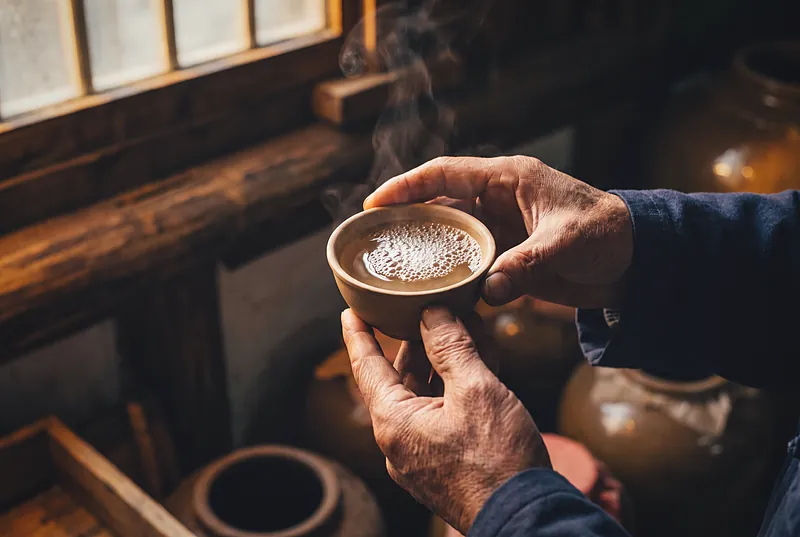
Before precise instruments, distillers judged these changes with their eyes and their palates.
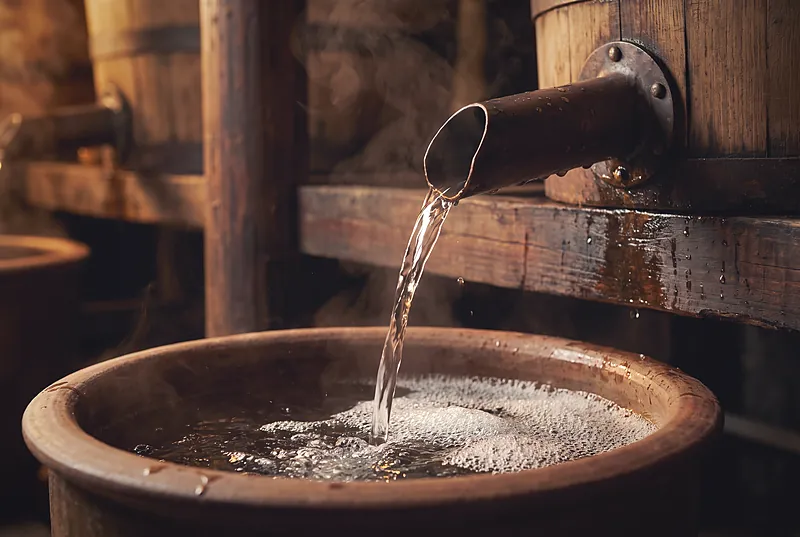
The best-known skill is "watching the flowers". As the spirit runs from the spout into the receiving vessel, it raises a layer of bubbles that distillers call jiuhua, "wine flowers". When the strength is high, the bubbles are large, even and clear, and vanish quickly; these are the "big clear flowers". As the strength falls, the bubbles grow smaller and linger longer. At the very end, an oily film appears on the surface, the "oil flowers", a sign that the tail has arrived. The changes come from differences in surface tension at different strengths.
"Collecting by quality" goes a step further. The distiller tastes while the spirit runs, cuts it into sections by quality, and stores each grade separately. The old phrase "pinch the head, remove the tail" describes separating the head and tail from the heart. Nothing is simply thrown away: the tails, for example, can be returned to the next round of fermentation or distillation1.
Choices behind every bottle
All of this happens within minutes. Cut too early and good spirit is lost as head; cut too late and the tail creeps into the heart. Every judgement at the still shapes the quality of the final spirit.
At Qifu we still distil in a traditional zeng still. Our distillers collect by quality and store each grade separately, the spirit rests in clay jars, and finally our master blender brings it together. The character of Bainian Qifu · 8, smooth on entry with a lingering sweetness, a full pit aroma and a nutty, caramel-like finish, comes from these many small decisions.
Good baijiu is chosen, drop by drop. When you taste it, we hope you take the distiller's pace: slowly, in small sips, and in moderation.